
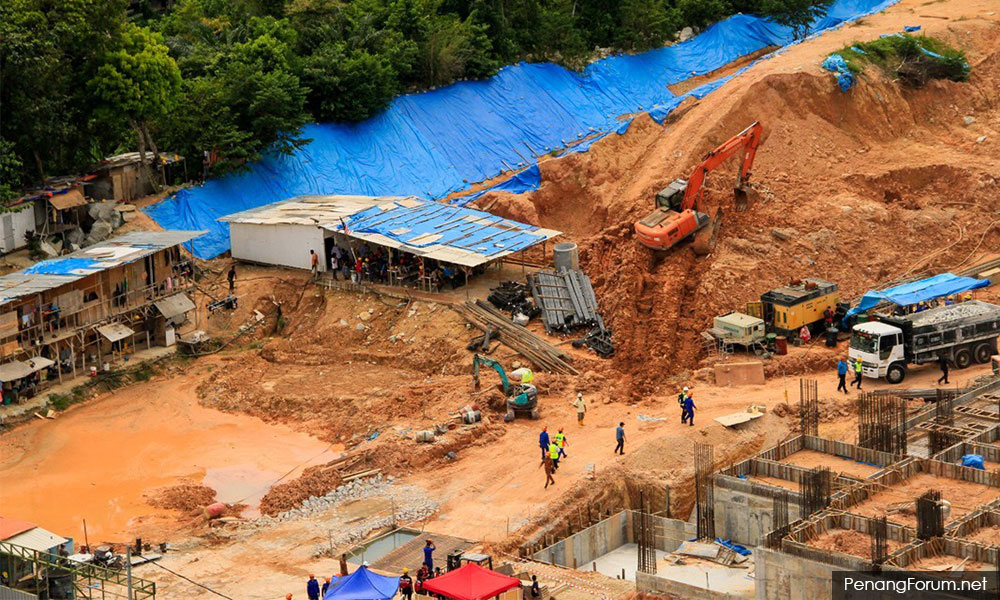
In response to growing concerns over environmental sustainability and public safety, the Penang state government imposed a ban on hillside developments above 76 meters in 2017. This decision was catalyzed by a series of landslides and soil erosion incidents, including a fatal landslide at Tanjung Bungah that claimed 11 lives.
The ban aimed to prevent further environmental degradation and mitigate the risks associated with hillside developments, such as landslides and flash floods. Developers challenged the ban, arguing that it affected their investments and project timelines. They claimed that the ban was implemented without adequate consultation and would lead to significant financial losses.
The state government, however, maintained its stance, emphasizing the importance of public safety and environmental conservation over economic interests. The case brought to light the complex balance between development and sustainability, as well as the importance of enforcing regulations that protect the environment and public welfare.
By 2021, the Penang state government had strengthened its commitment to sustainable development, implementing stricter guidelines for future projects and promoting eco-friendly urban planning practices. This case highlights the need for a holistic approach to development that considers long-term environmental impacts and prioritizes community safety.